10 Signs a Tree Needs to Be Removed Before It Becomes Dangerous
Some of the most important signs a tree needs to be removed include severe decay, extensive dead branches, major trunk damage, unstable roots, and a sudden or worsening lean. These conditions can increase the risk of falling limbs or tree failure, particularly during strong winds and severe weather.
For property owners in Jacksonville, Arkansas, recognizing potential warning signs early can help reduce risks around homes, vehicles, walkways, and other areas of the property. Not every damaged or unhealthy tree needs to come down, but some conditions can become too serious to ignore.
How Do You Know When a Tree May Need Removal?
Tree problems can develop gradually or appear suddenly after severe weather. Some warning signs are easy to recognize, such as a fallen section of a tree or a large hanging branch. Others can be more difficult to notice.
Changes in the trunk, roots, branches, canopy, or position of a tree can indicate a developing problem. Paying attention to these changes is especially important when a tree is close to a house, driveway, fence, or frequently used area.
Here are 10 warning signs property owners should watch for.
10 Warning Signs a Tree May Need to Be Removed
1. The Tree Is Dead
A dead tree cannot produce healthy new growth or recover from existing damage. As dead wood deteriorates, branches can become brittle and more likely to break.
A dead tree can become a greater concern when it stands near a home, vehicle, walkway, neighboring property, or another area where falling wood could cause damage or injury.
2. Large Sections of the Tree Are Dying
A tree does not have to be completely dead to show signs of serious decline. Large areas without healthy foliage, extensive canopy dieback, or repeated loss of major branches can indicate that the tree is struggling.
A small amount of dead growth may not mean the entire tree requires removal, but widespread decline should not be overlooked.
3. The Trunk Shows Significant Decay
The trunk provides much of the structural support for a tree. Extensive rot, crumbling wood, large cavities, or other visible deterioration can be cause for concern.
A cavity by itself does not automatically mean removal is necessary. However, substantial deterioration combined with other problems, such as dead branches or a worsening lean, deserves attention.
4. The Tree Develops a Sudden Lean
Some trees naturally grow at an angle and remain that way for years. A tree that suddenly begins leaning, or develops a noticeably greater lean, can be more concerning.
Changes following heavy rain, high winds, or severe weather may indicate movement around the root system or surrounding soil. A newly leaning tree should not be ignored, especially when structures or frequently used areas are nearby.
5. The Roots Have Been Seriously Damaged
Roots anchor a tree and provide the water and nutrients it needs. Excavation, construction work, soil disturbance, disease, and severe weather can all affect the root system.
Significant root damage may weaken a tree even when the trunk and canopy still appear relatively healthy. Exposed, broken, or disturbed roots combined with a changing lean can be particularly concerning.
6. Major Branches Are Dead or Broken
Large dead, cracked, broken, or hanging branches can create hazards below the canopy. This is especially important when affected limbs extend over a roof, driveway, parking area, walkway, fence, or other frequently used space.
Some branch problems may be addressed through professional trimming or pruning. More extensive damage can indicate a larger structural problem.
7. The Trunk Has Large Cracks or Splits
Deep cracks, major splits, or separation where large limbs connect to the trunk can indicate structural weakness.
Not every crack presents the same level of concern. However, significant splitting can worsen as the tree moves in the wind or carries the weight of large branches. Visible changes in a major crack or split should not be dismissed.
8. Storm Damage Has Left the Tree Unstable
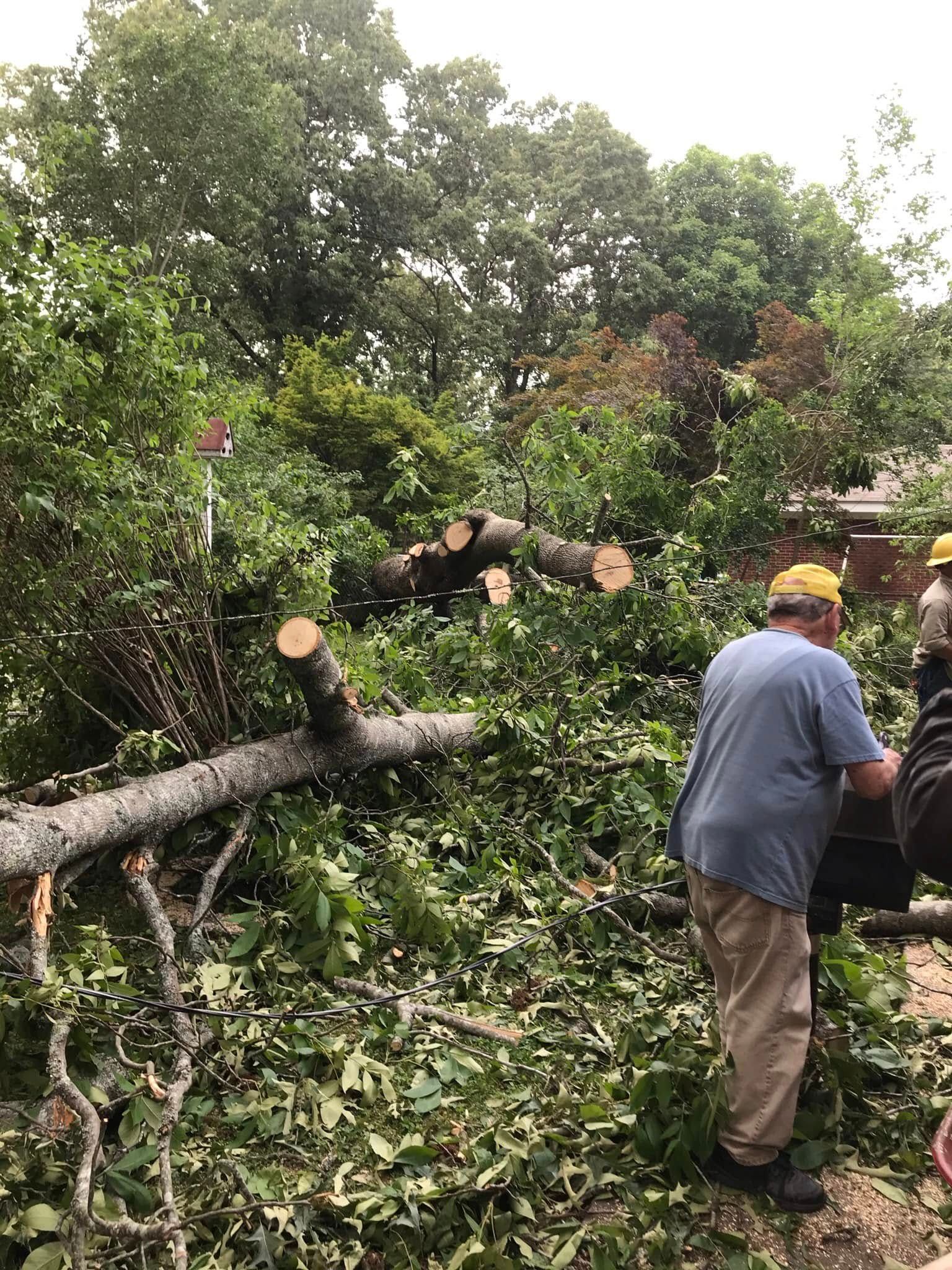
Arkansas storms can bring strong winds and heavy rain that place considerable stress on trees. Severe weather may break limbs, split trunks, disturb roots, or cause trees to shift.
If a storm-damaged tree appears unstable, keep people and vehicles away from the immediate area when possible. Avoid standing beneath hanging branches or attempting to cut unstable sections without the appropriate experience and equipment.
9. A Damaged Tree Threatens Nearby Structures
A healthy tree growing close to a home does not automatically need to be removed. The situation becomes more concerning when a damaged, declining, or unstable tree is positioned where falling limbs or tree failure could affect nearby structures.
Homes, garages, fences, vehicles, driveways, and neighboring property can all increase the potential consequences of a tree-related failure.
10. The Tree Continues to Decline
Tree trimming and pruning can address certain branch-related problems, but they cannot correct every type of damage.
A tree that continues to deteriorate, lose major branches, develop significant decay, or show multiple warning signs may eventually reach a point where removal becomes a consideration. Property owners should pay attention when several problems occur at the same time rather than viewing each warning sign in isolation.
When Should Tree Problems Receive Immediate Attention?
Certain situations call for greater caution. A tree that has partially fallen, a large branch hanging over an occupied area, a newly leaning tree, or major storm damage can present a more immediate concern than gradual changes in appearance.
Keep a safe distance from unstable trees and hanging limbs. If a damaged tree or branch is touching or near a power line, avoid approaching it and contact the appropriate utility or emergency authority.
Frequently Asked Questions About Tree Removal
Does a leaning tree mean it is about to fall?
Not necessarily. Some trees naturally grow at an angle and remain stable for many years. A sudden or worsening lean can be more concerning, particularly after severe weather or when accompanied by exposed roots, cracked soil, or visible movement around the base.
Does a dead tree always need to be removed?
Not every tree situation is identical, but a dead tree cannot recover and may lose structural strength as the wood deteriorates. Its size, condition, location, and proximity to people or property are important considerations when deciding what to do next.
Can trimming help a damaged tree?
Trimming may address dead, broken, or overgrown branches in some situations. However, trimming cannot correct every problem involving severe trunk damage, extensive decay, major root problems, or widespread decline.
Is it safe to remove a damaged tree yourself?
Tree removal can involve unstable wood, heavy branches, significant heights, and nearby structures. Large, leaning, storm-damaged, or otherwise unstable trees can create serious hazards during cutting and removal. Professional tree services are generally the safer choice for situations that require specialized equipment or experience.
Need Tree Removal in Jacksonville, AR?
If you are dealing with a dead, damaged, leaning, storm-damaged, or unwanted tree, Fourth Generation Tree Service provides tree removal and related tree services in Jacksonville, Arkansas. Visit the company website to learn more about available tree services in Jacksonville and how to get in touch.
Recent Posts